Your Personalized NVIDIA Playbook
You've worked too hard for your resume to fail the NVIDIA MLE interview. Walk in knowing your 3 biggest red flags — and exactly what to say when they surface.
Not hoping you prepared the right things. Knowing.
Your report starts with your resume, scores you against this exact role, and tells you which NVIDIA Values you can prove with evidence — and which ones NVIDIA will probe. Then it shows you exactly what to do about the gaps before they find them. Your STAR stories are pre-drafted from your own experience. Your gap scripts are written for your specific vulnerabilities. Nothing generic.
Loop Question Set — Free
- ✓ Real questions from across the NVIDIA MLE loop
- ✓ A weak answer next to a strong one for each
- ✓ What the interviewer is actually testing
- 🔒 How your background measures up
- 🔒 STAR stories drafted from your resume
- 🔒 Scripts for your specific gaps
→
Your Report — Personalized
- ✓ Your 3 biggest red flags — identified by name
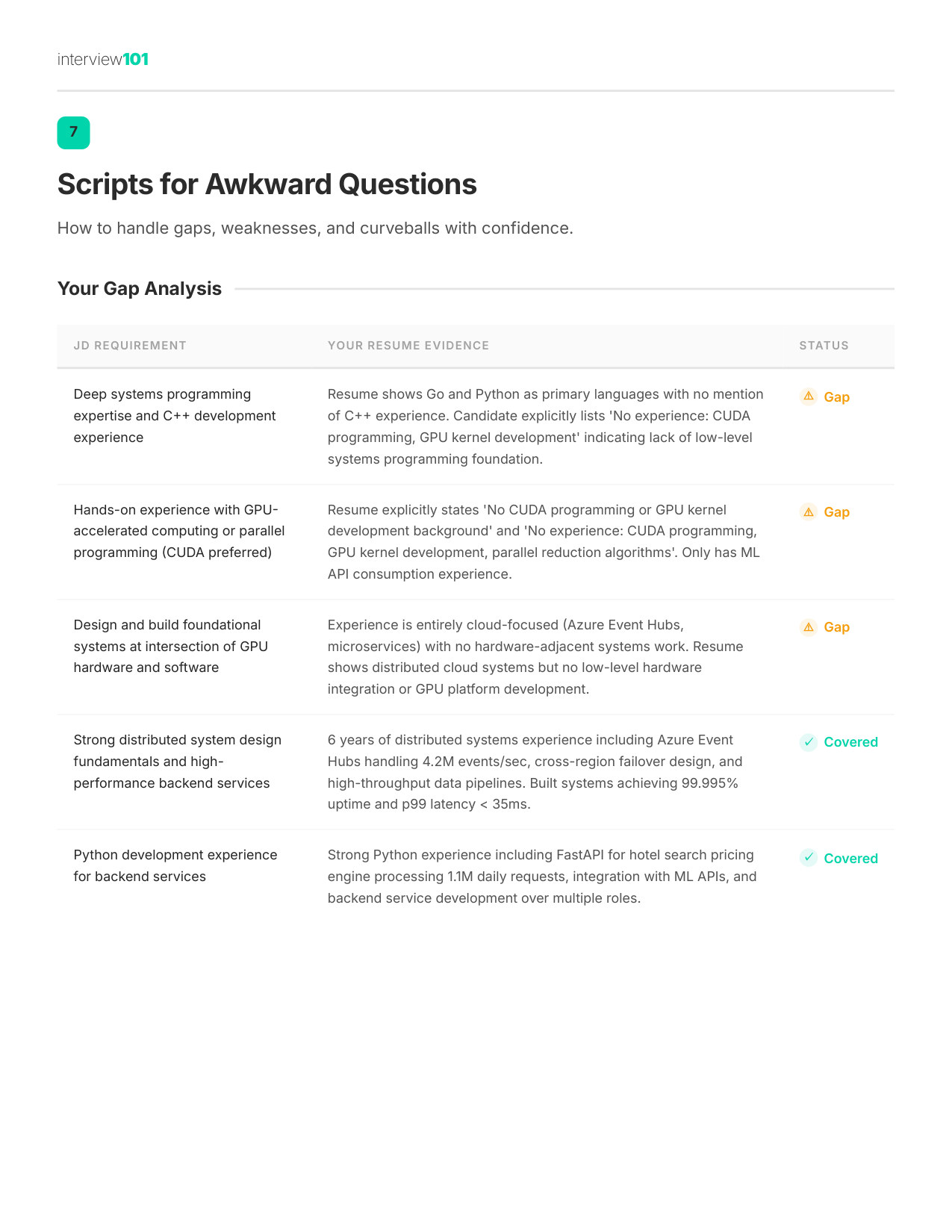
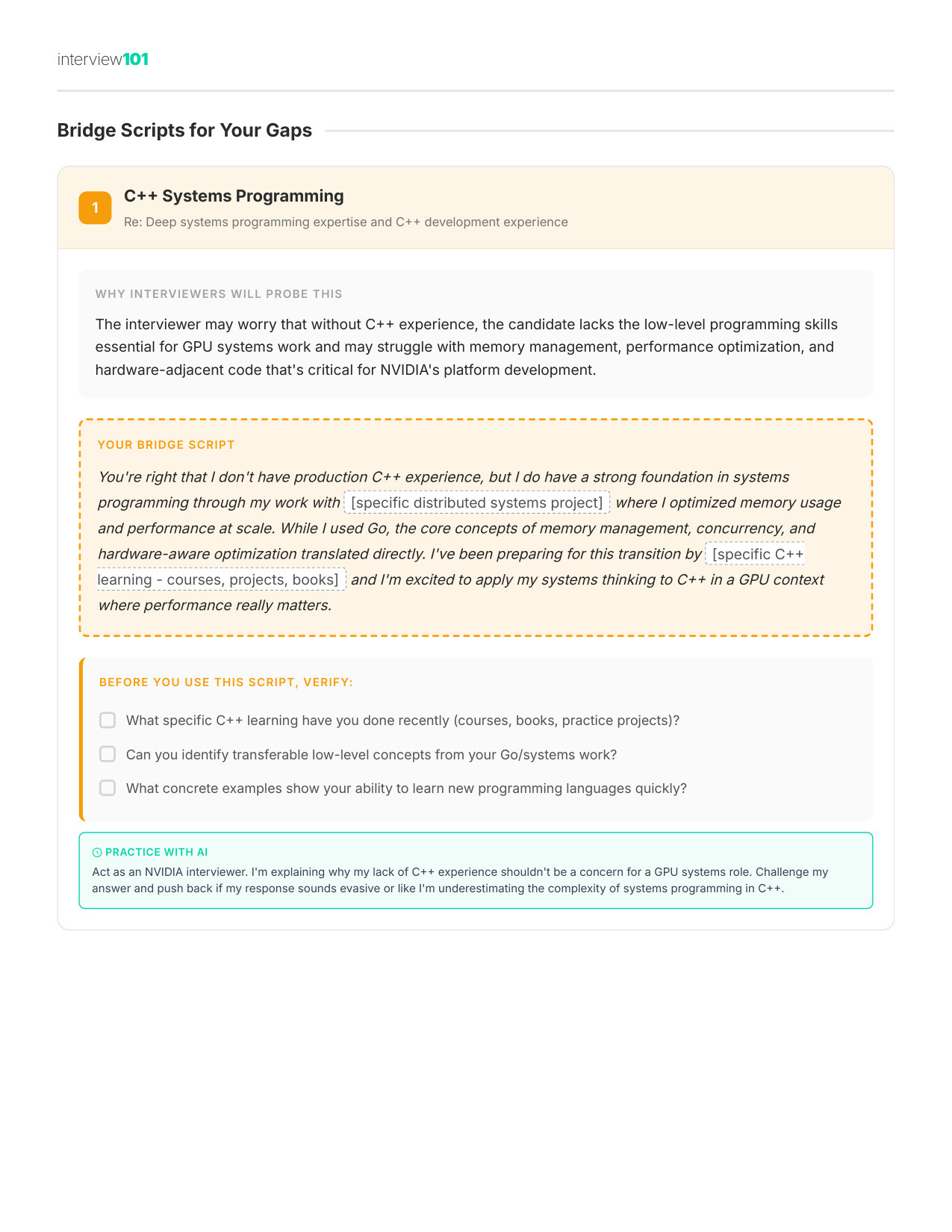
- ✓ Exact bridge scripts for each gap
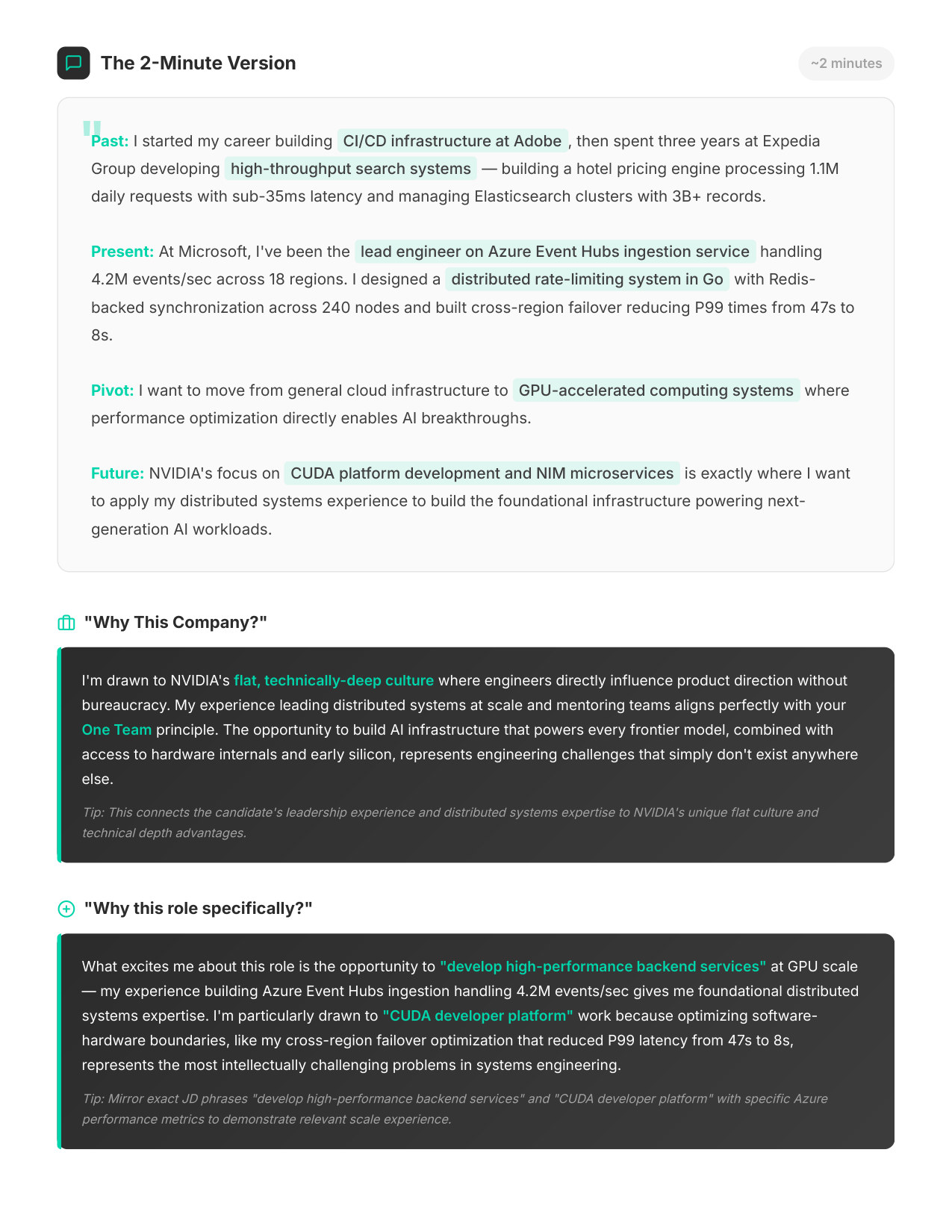
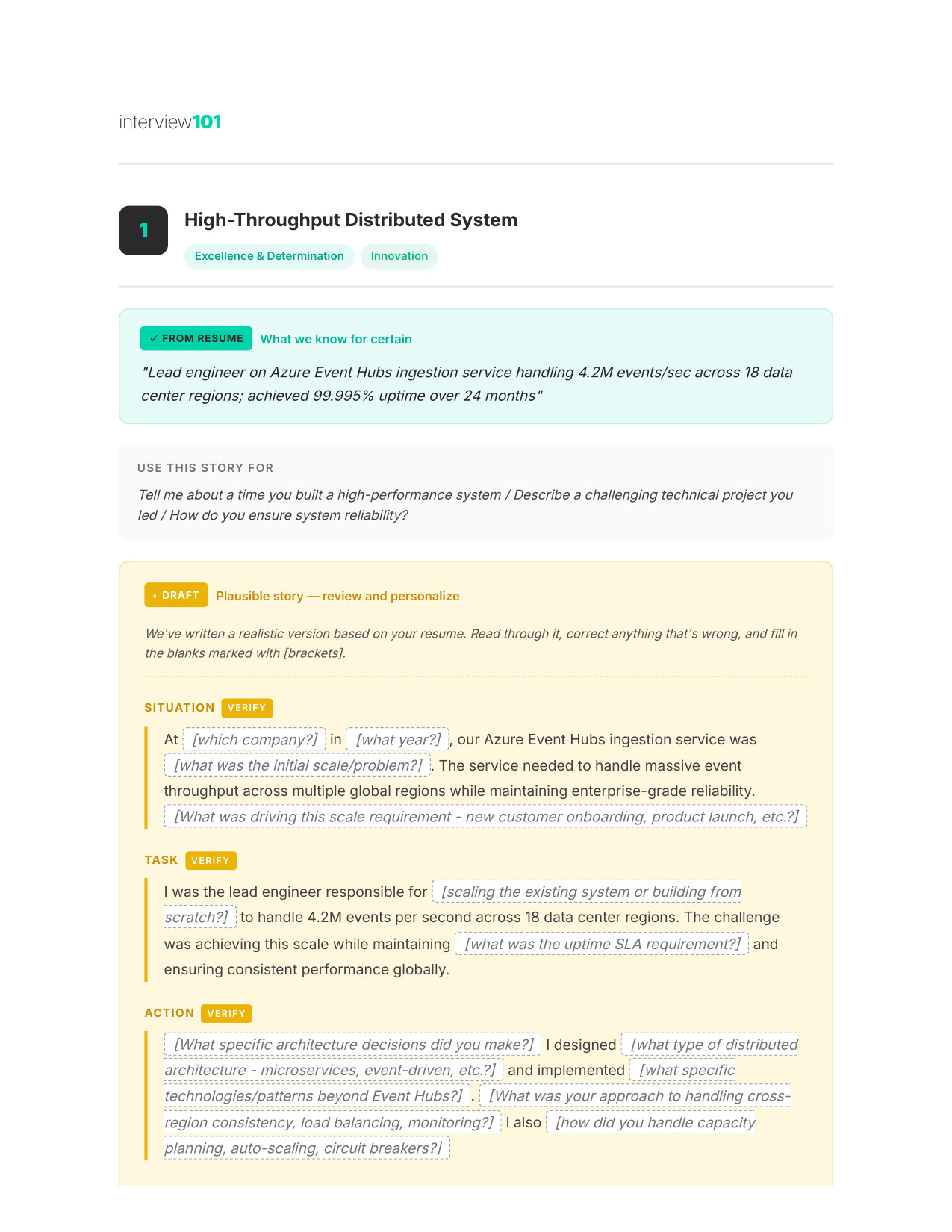
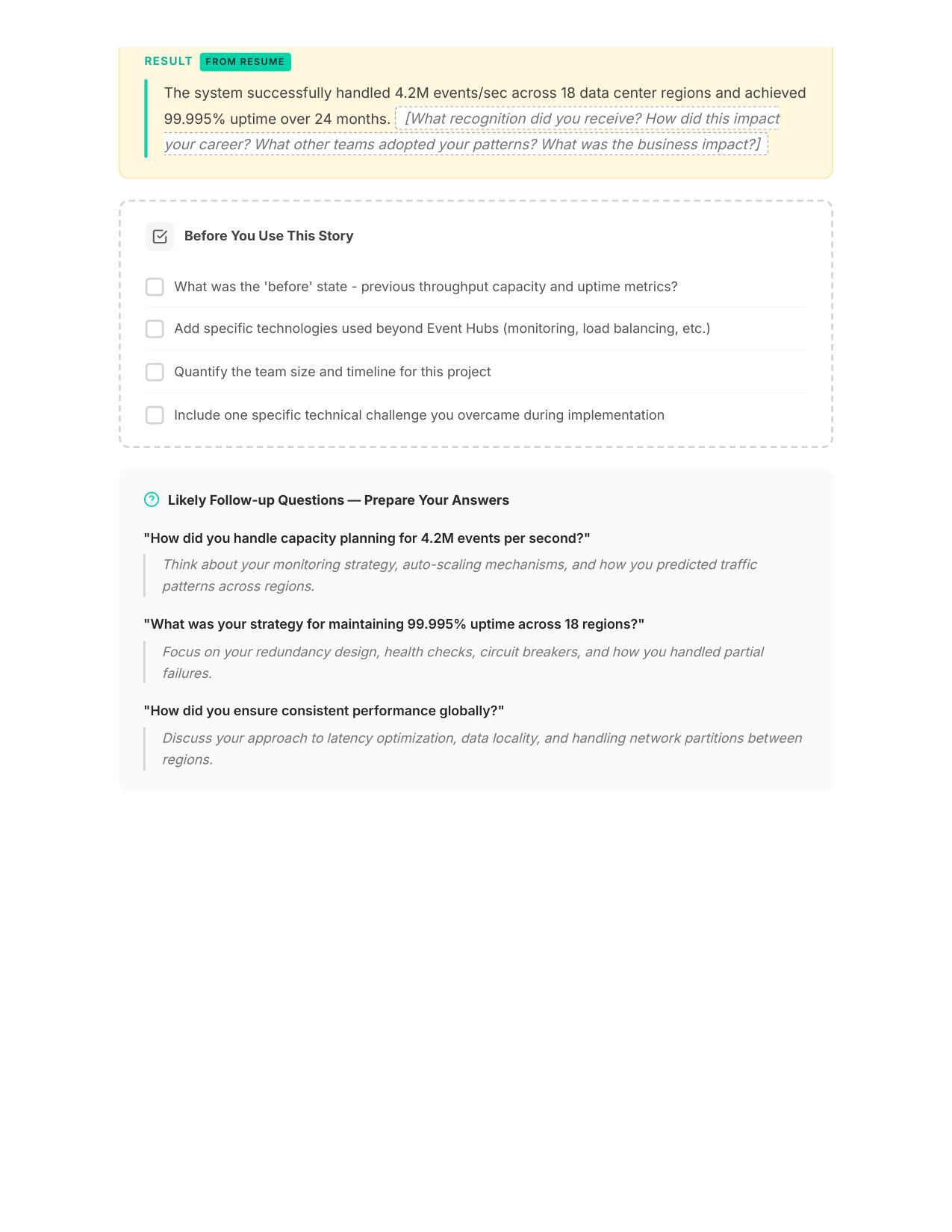
- ✓ Your STAR stories pre-drafted from your resume
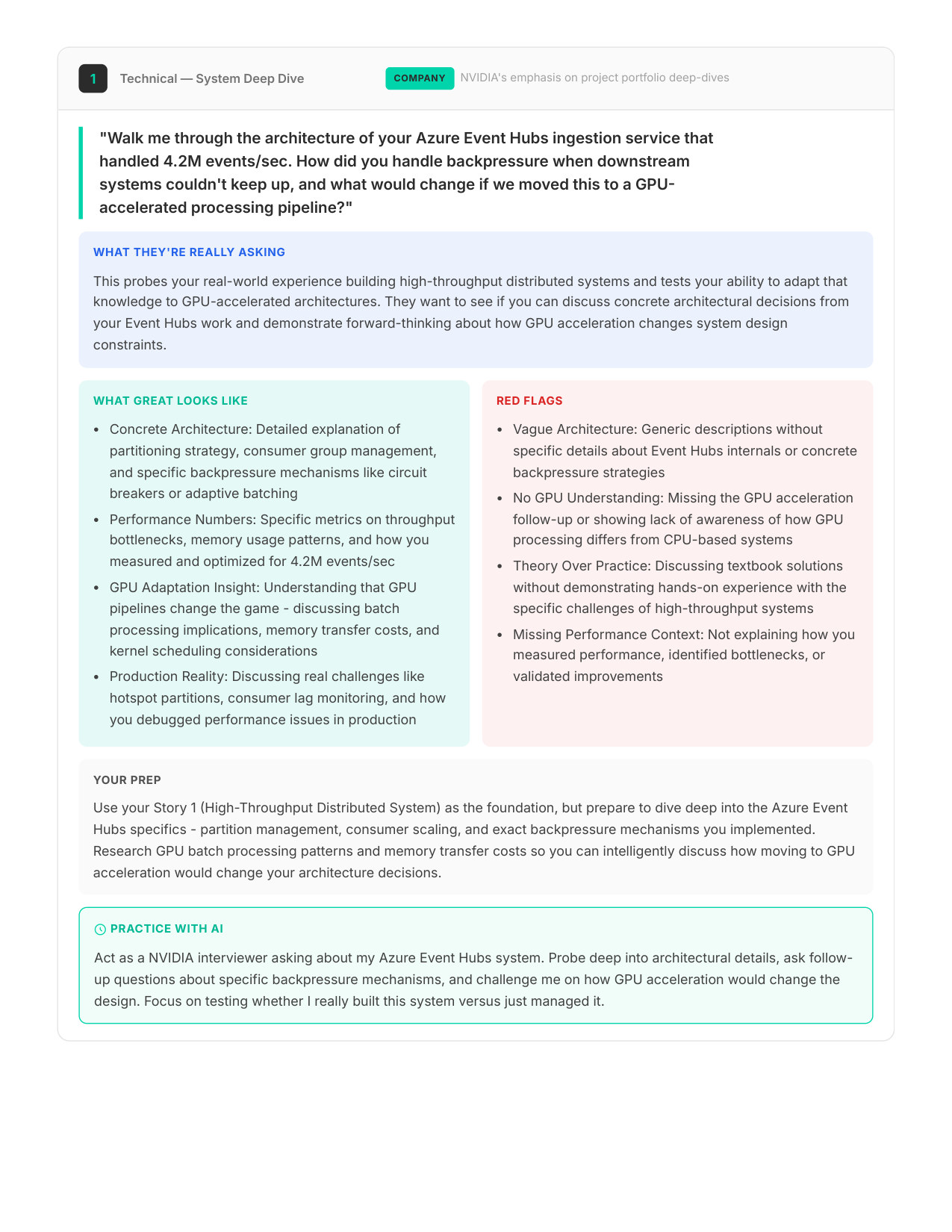
- ✓ Question types most likely for your background
- ✓ Your experiences mapped to NVIDIA Values
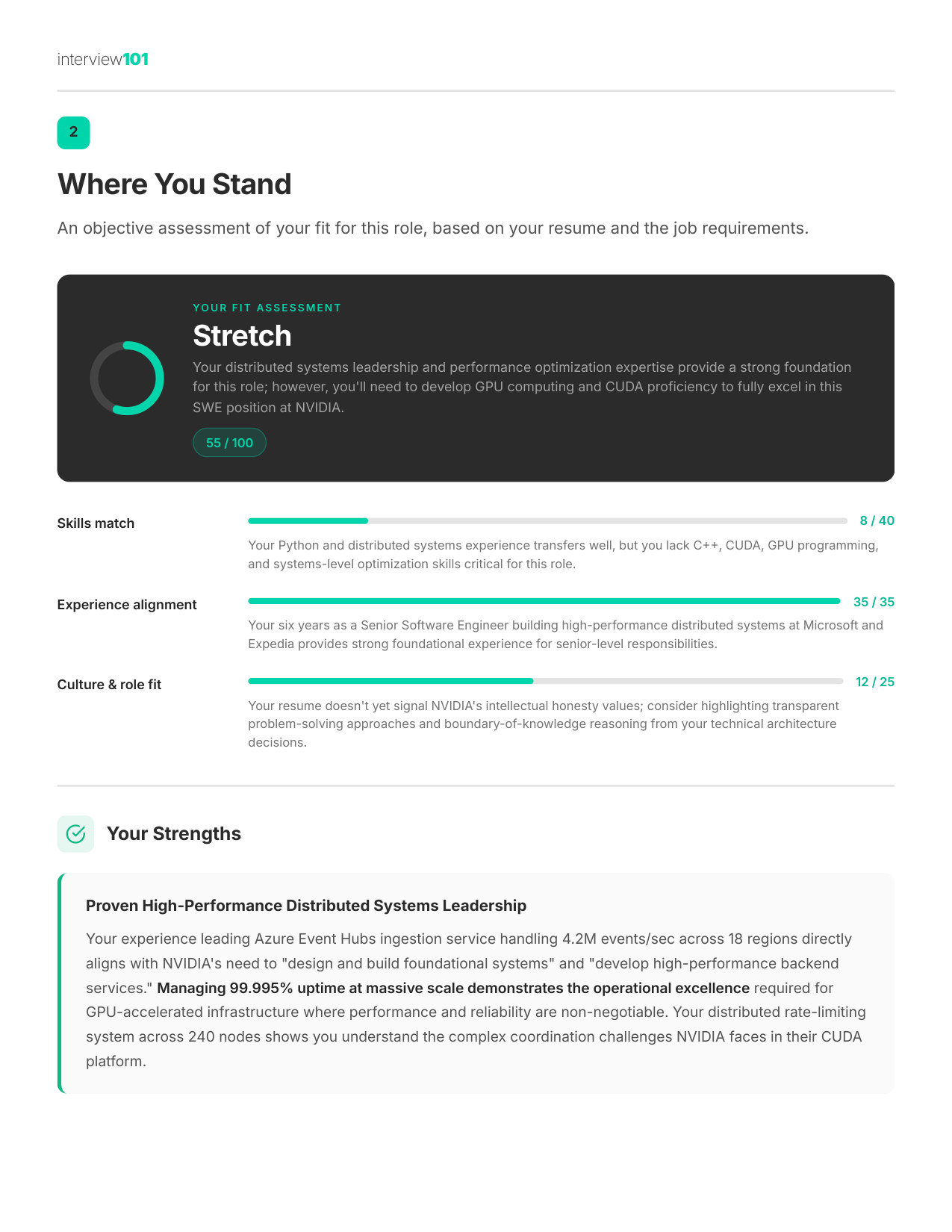
- ✓ Your fit score against this exact role
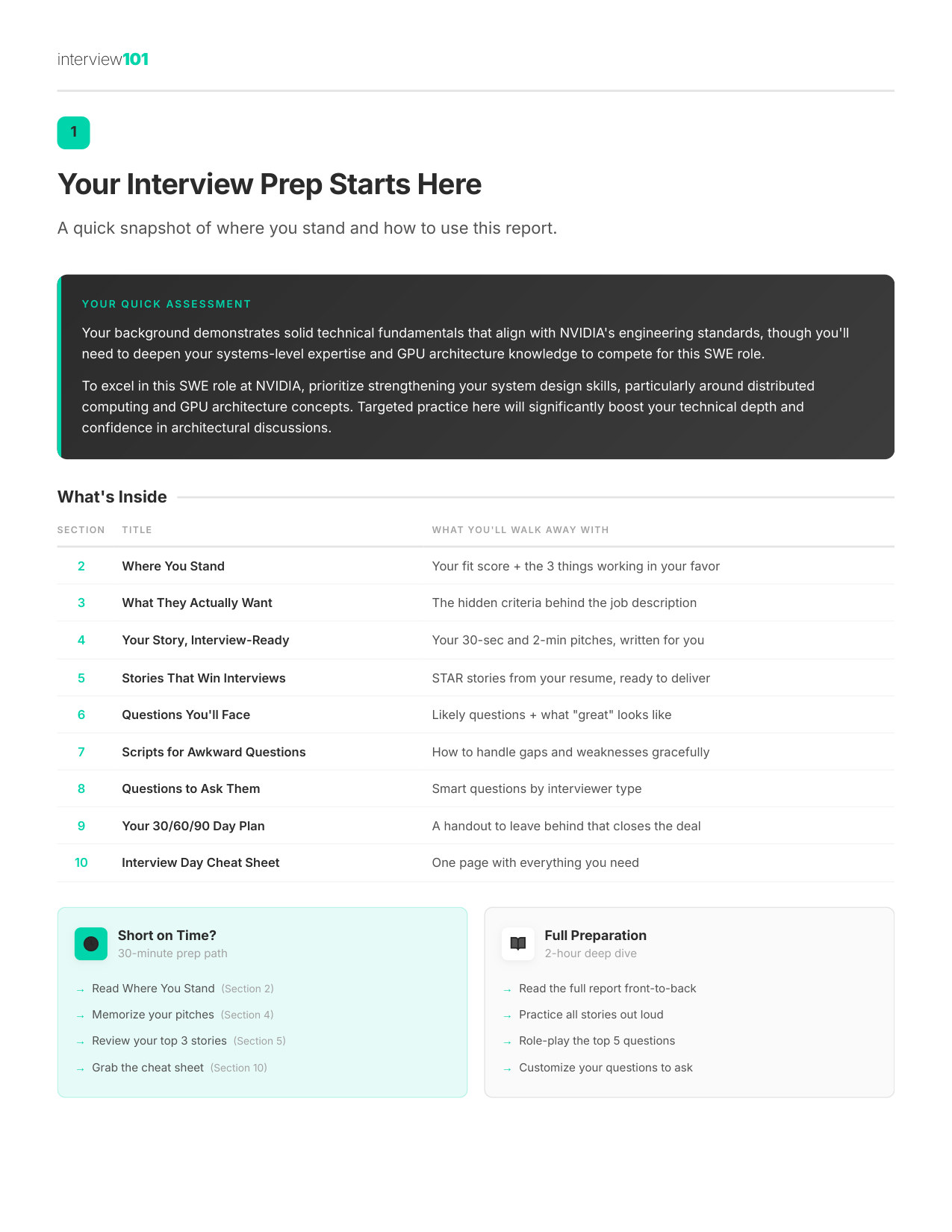
What's Inside Your 55-Page Report
1
Orientation
The unspoken bar NVIDIA sets — what most candidates miss before they even walk in
2
Where You Stand
Your fit score by skill, experience, and culture fit — know your strengths before they probe your gaps
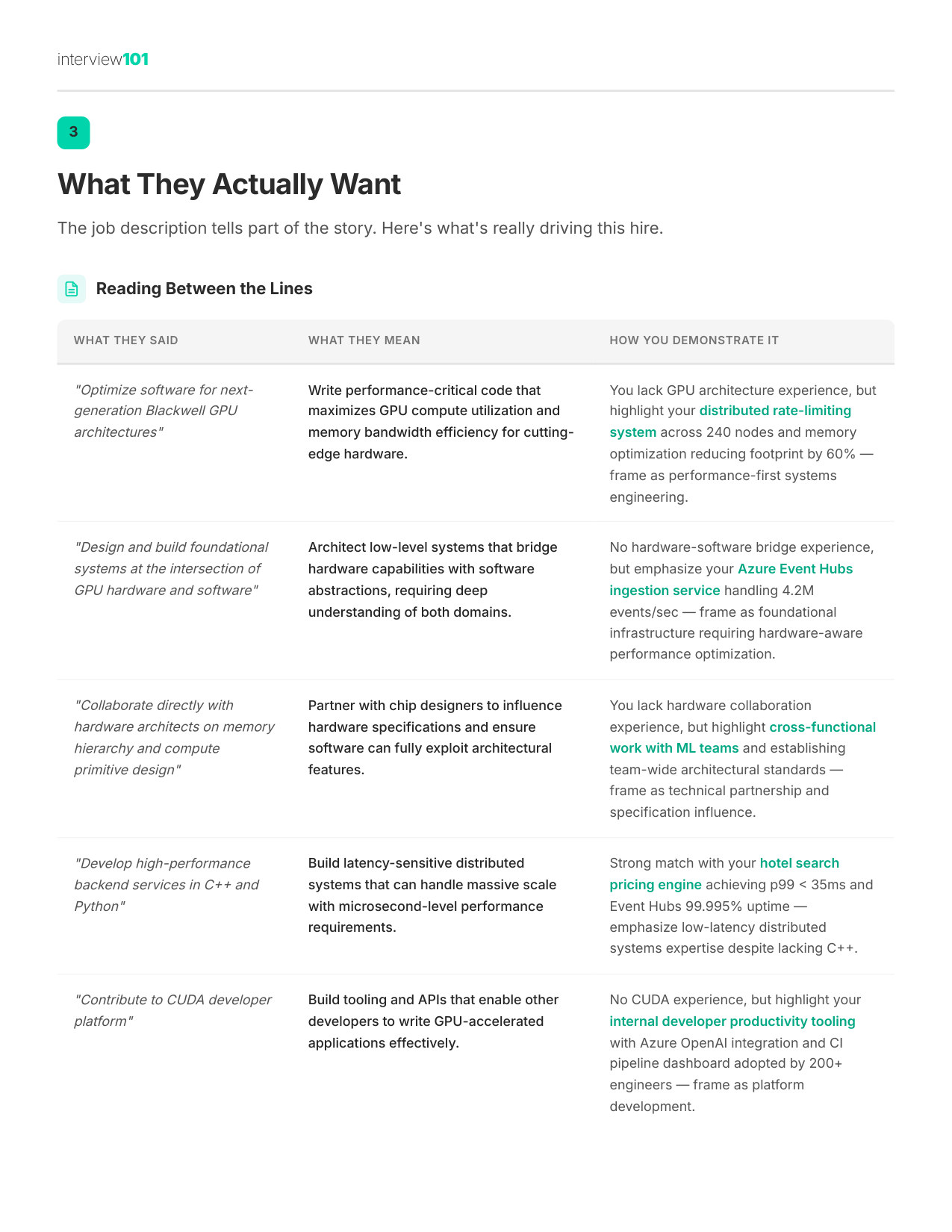
3
What They Actually Want
The real criteria interviewers score you on — beyond what the job description says
4
Your Story
Your resume reframed for NVIDIA's lens — how to position your background so it lands
5
Experience That Wins
Your specific experiences mapped to the NVIDIA Values you'll face — walk in knowing which examples to use
6
Questions You Will Face
The question types most likely given your background — with what a strong answer looks like for someone in your position
7
Scripts for Awkward Questions
Exact words for when they probe your weakest areas — so you do not freeze when it matters most
8
Questions to Ask Them
Sharp questions that signal preparation and seniority — and make interviewers remember you
9
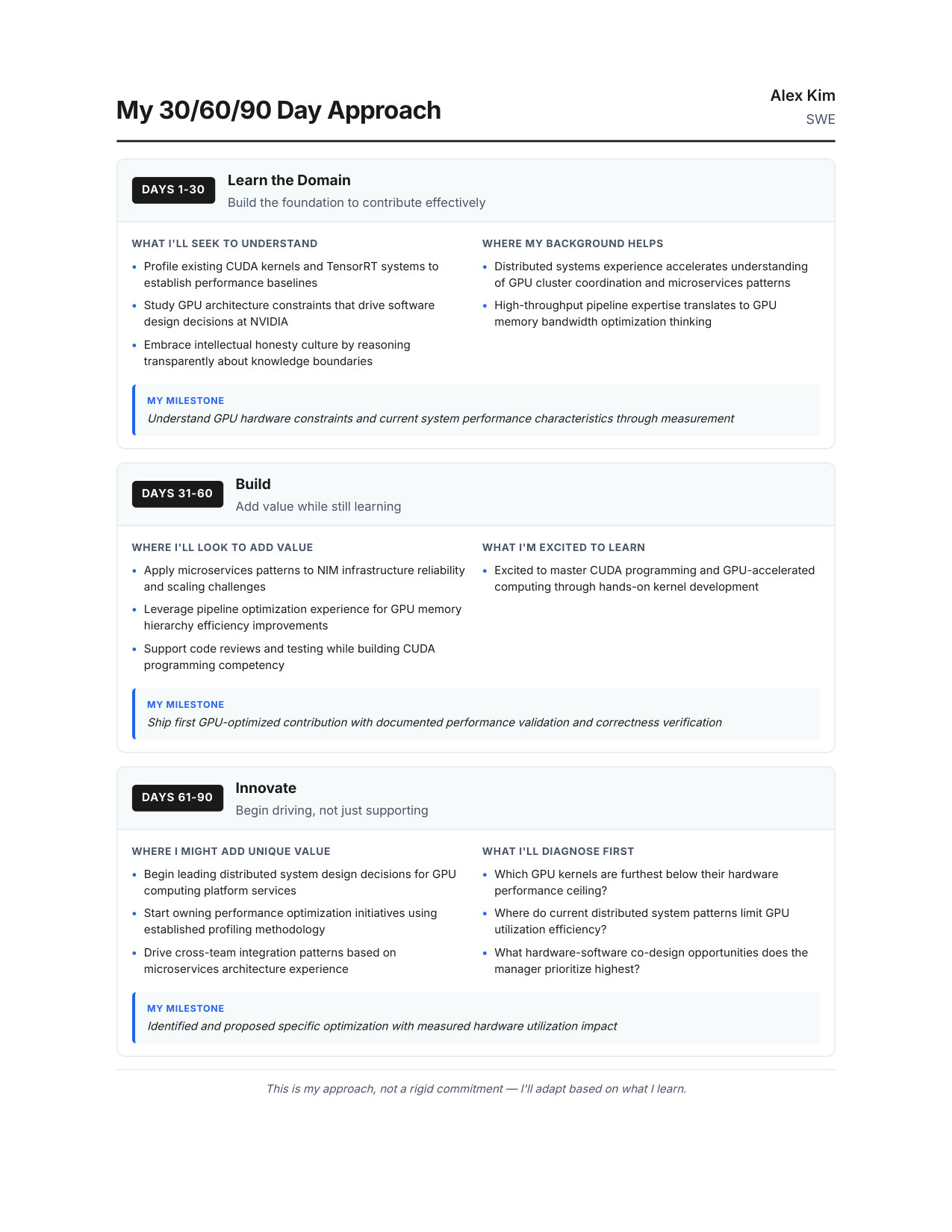
30/60/90 Day Plan
Show NVIDIA you're already thinking like an employee — demonstrates ownership from day one
10
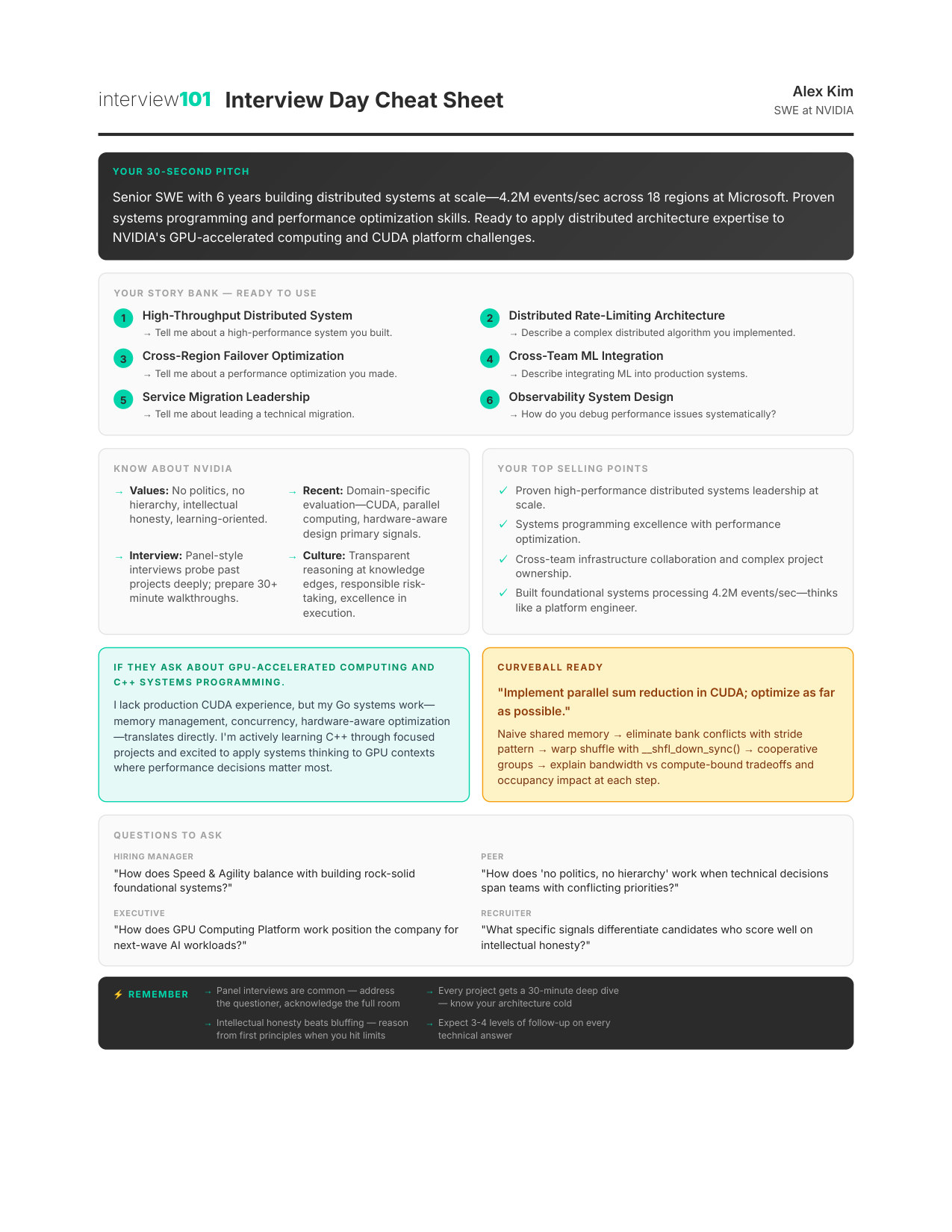
Interview Day Cheat Sheet
One page. Everything you need. Review 5 minutes before you walk in — and walk in ready.
How It Works
1
Upload your resume + target JD
The job description you're actually applying to — not a generic one
2
We analyze your fit
Your background is scored against the NVIDIA MLE blueprint — gaps, strengths, likely questions
3
Your report arrives within 24 hours
55-page personalized PDF delivered to your inbox — ready to work through before your interview
See Inside the Report
Real pages from a NVIDIA Software Engineer report
Your MLE report follows the same structure — built entirely around your background and this role.
Download the Full Sample Report — Free
See exactly what you're buying before you commit — 50+ pages, no email required
$149
One-time · 55-page personalized report · Delivered within 24 hours
Built by an ex-FAANG interviewer — 8 years, hundreds of interviews conducted
Get My NVIDIA MLE Report
🔒 30-day money-back guarantee — no questions asked